Fundamentals of life cycle thinking
The life cycle perspective takes a holistic view and considers the impacts of products and services. It widens the perspective to include all life cycle stages from extraction of raw materials, through production, transportation and use, to end-of-life processing. If you’re new to this area, this page offers a variety of resources to help you become familiar with the field.
What is Life Cycle Assessment?
Life cycle assessment, LCA, is an analytical method which aims to calculate the potential impact on the environment and the society that a product or service gives rise to throughout its life cycle from ‘cradle to grave’ – from raw material extraction to end of life handling.
From ISO 14040:2006
“life cycle assessment (LCA); is the compilation and evaluation of the inputs, outputs and the potential environmental impacts of a product system throughout its life cycle.”
“life cycle impact assessment (LCIA); phase of life cycle assessment aimed at understanding and evaluating the magnitude and significance of the potential environmental impacts for a product system throughout the life cycle of the product.”
“life cycle inventory (LCI); is a phase of life cycle assessment involving the compilation and quantification of inputs and outputs for a product throughout its life cycle”
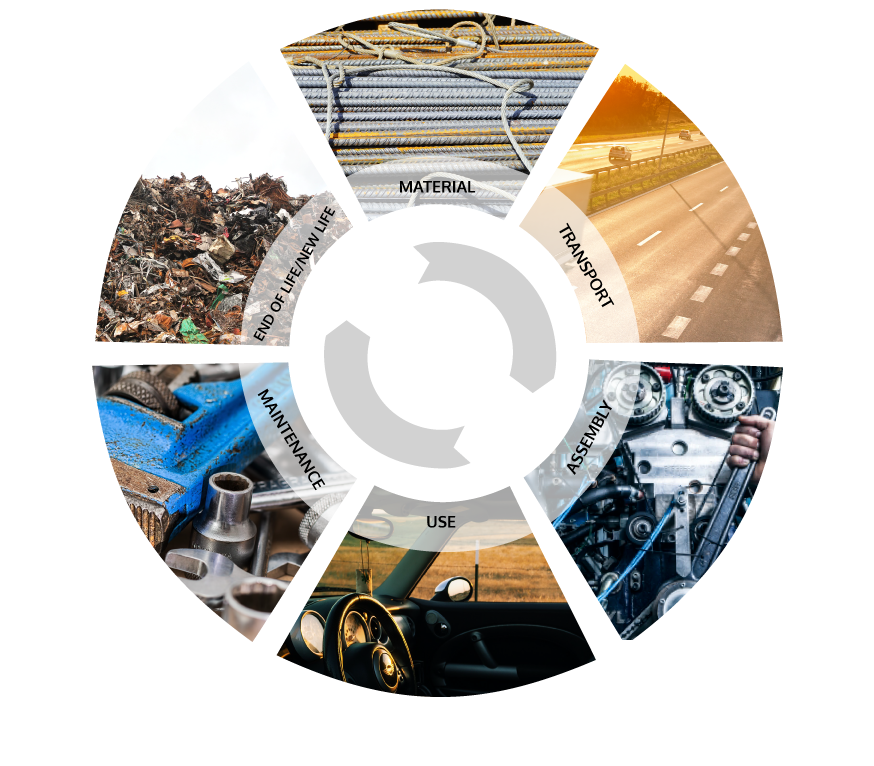
Life Cycle Management
Life Cycle Thinking is made operational through Life Cycle Management (LCM). LCM is a management approach that puts the tools and methodologies in the life cycle thinking basket into practice. It is a product management system that helps enterprises to minimize the environmental and social burdens associated with their product or product portfolio during its entire life cycle.
What are value chain hotspots?
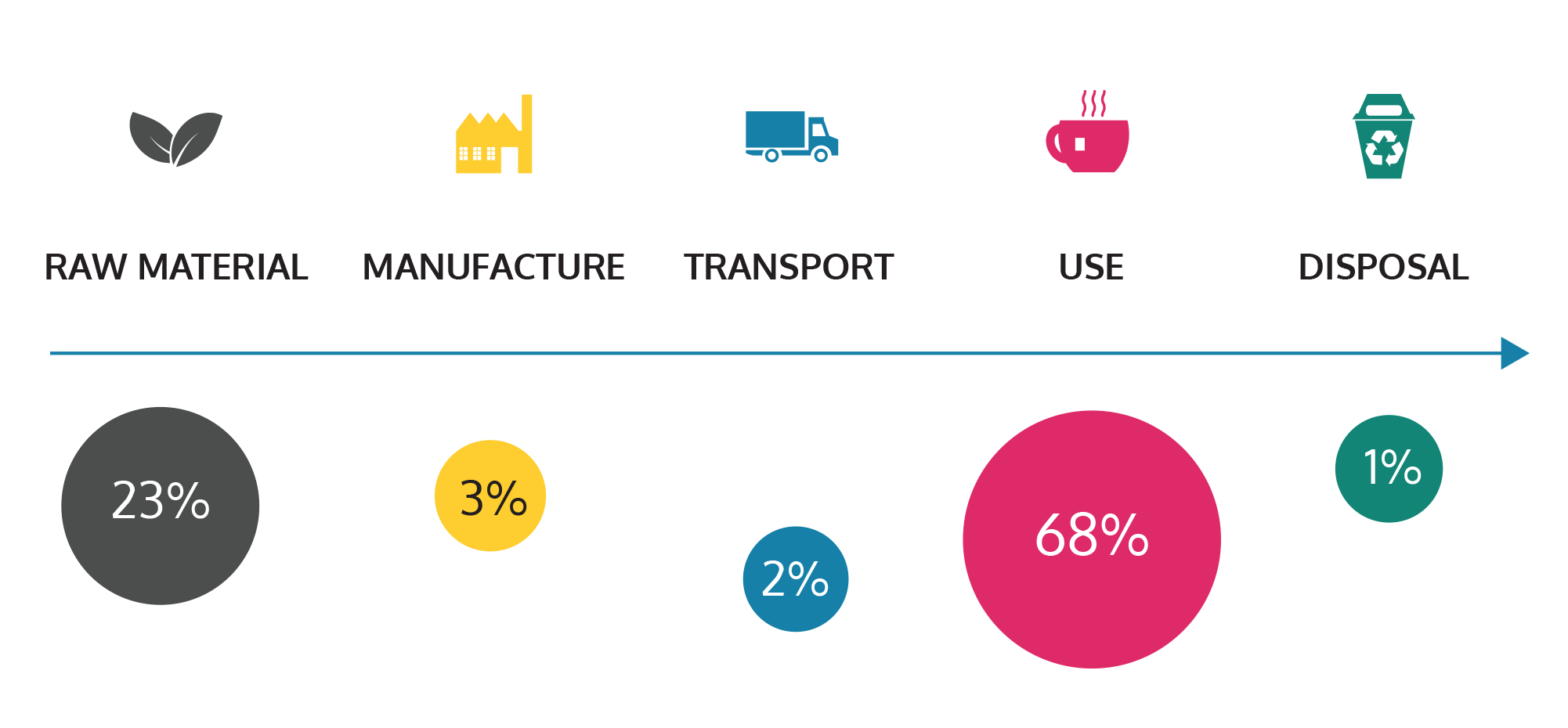
Life Cycle Assessment enables organizations to identify hotspots within their value chains that have the greatest environmental impact and the highest potential for improvement.
At each stage of the life cycle, there are opportunities to reduce resource consumption and improve performance.
The example shows the distribution of environmental impact from a tea bag during its life cycle.