30 years of life cycle thinking – and a look towards the future
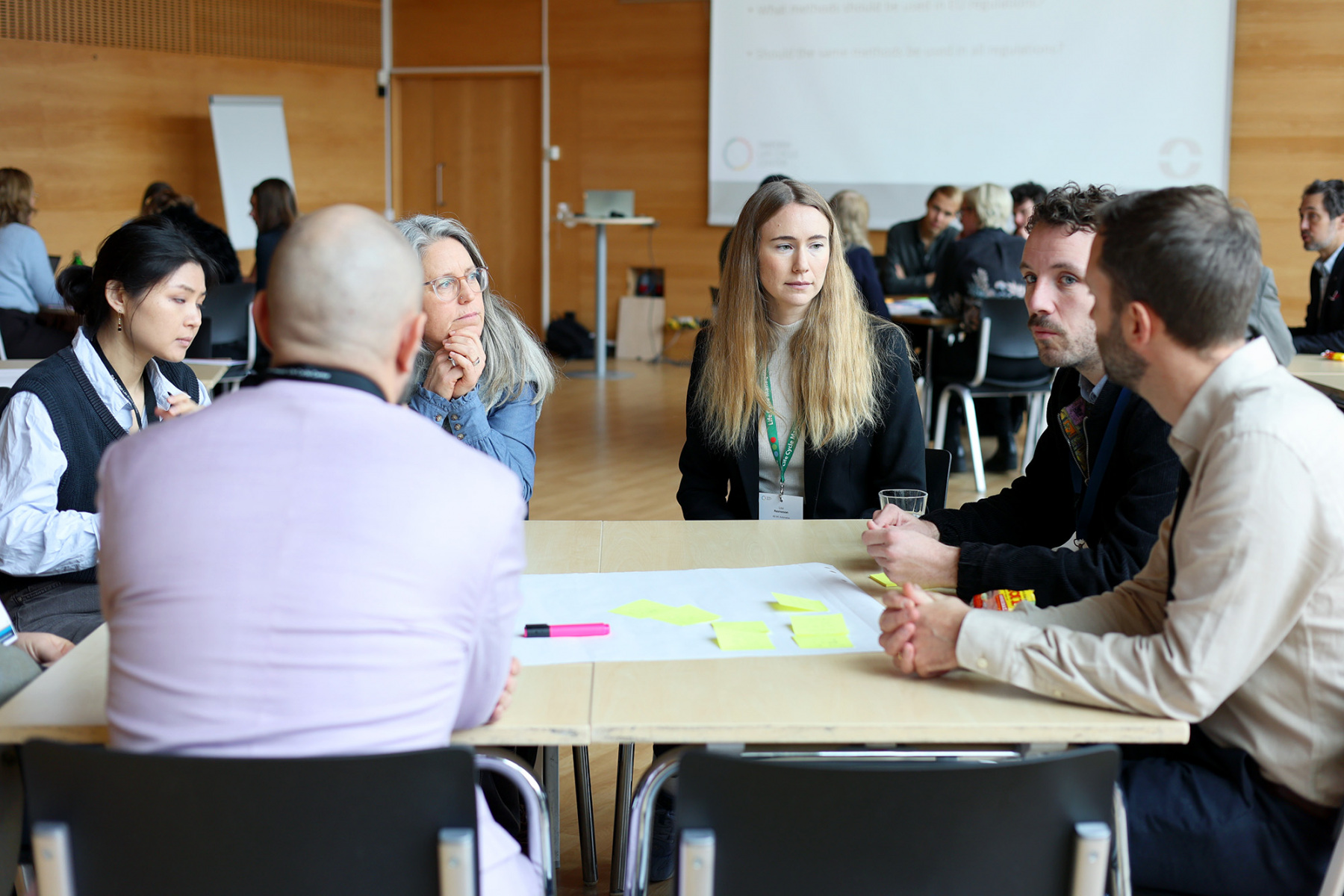
This year’s Swedish Life Cycle Center Network Conference brought together 140 participants in Gothenburg, this time with an extra reason to meet. As the Center celebrates its 30th anniversary, the conference looked back at three decades of collaboration and turned the conversation towards where life cycle thinking needs to go next.
“It has been wonderful to celebrate this milestone together. What stays with me most from the day is how often we came back to the people behind the methods and the change we want to achieve. We talked about AI and the opportunities it can bring, but also about dialogue, collaboration and the human connections that help us turn knowledge into action. To me, that combination feels like an important message to take with us into the future,” says Maria Rydberg, Director of Swedish Life Cycle Center.
From knowledge to action
In her opening keynote, Maria Wolrath Söderberg, Södertörn University, addressed a central question: if we know the seriousness of the climate situation, have much of the technology needed and broadly want change, why is the transition still moving too slowly?
Part of the answer, she argued, lies in how we communicate knowledge and engage the people who need to act on it.
“Think in terms of dialogue. Where would this knowledge matter, and what stops people from acting on it? Start with the audience and what they need,” she said.
The discussions that followed approached sustainability from several directions. The parallel sessions covered new EU regulations, AI in LCA, the role of life cycle thinking in the financial sector and the personal experiences of people working to drive sustainability and change.
Later in the day, the focus widened to societal development from a systems perspective, with contributions from keynote speaker Göran Finnveden, KTH, together with Anders Nordelöf, VTI and Chalmers, Sandra Roos, Kappahl, and Michael Martin, IVL and KTH, spanning transport, textiles and food systems.
Drawing on her experience from both research and industry, Sandra Roos spoke about bringing sustainability knowledge into the decisions that shape a business.
“Everyone that has a business responsibility must have a sustainability responsibility. You cannot have people working with business decisions on one side and then a separate department working with sustainability decisions,” she said.
Celebrating research excellence
The conference also included the presentation of the very first Swedish Life Cycle Center Research Excellence Award.
This year’s award was presented to Celeste Lai for her doctoral thesis “Navigating within the planetary limits: A prospective life cycle environmental sustainability assessment in support of the energy transition in Swedish aviation”, conducted at KTH.
The new award recognises the quality of life cycle research by researchers who have recently completed their doctoral degree at a Swedish Life Cycle Center partner university.
What will the next decade require?
The final part of the conference turned the focus firmly towards the future. Llorenç Milà i Canals of the UNEP Life Cycle Initiative provided a global outlook before Henrikke Baumann, Chalmers, Johan Widheden, WWF, Mats Berglund, SKF and Emilia Ingemarsdotter, Knowit, continued the discussion on the future of life cycle thinking.
One point raised by Henrikke Baumann was the need to look beyond LCA as a method and pay closer attention to where and how it is used.
“We tend to hug the method as such sometimes. And then we forget that it’s not an end in itself. It’s a means for something else. Understanding the context in which LCA is being used is paramount,” she said.
The 30th Anniversary and Network Conference was made possible with support from Chalmers University of Technology, SKF, Volvo and Essity.